

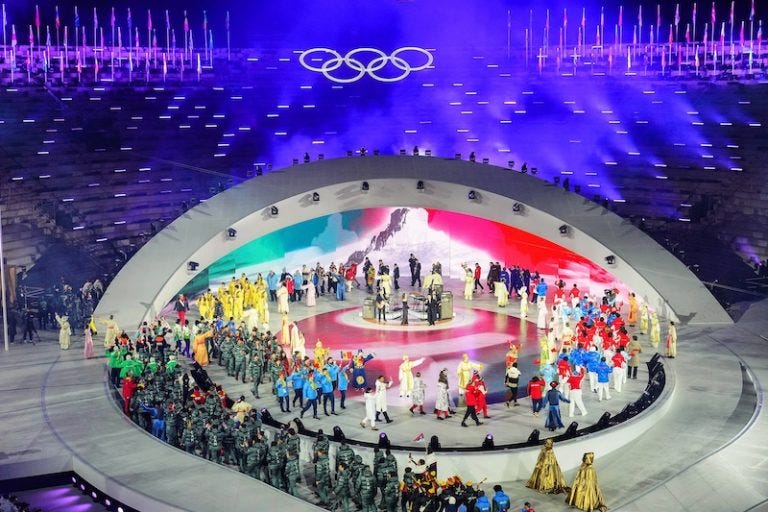
By the time this article is published, the Olympics will be over, and it will have brought us exhilaration, disappointment, and joy.
Behind the scenes are hundreds of thousands of hours of effort, exhaustion, pain, expenditures, and dedication. I watched the US women’s hockey team win the Gold medal in a close game with the Canadian women’s Olympic team and I wondered how they were able to get there.
I was not surprised to discover that the USA Hockey women’s national team players train extensively in a full-time, year-round environment to prepare for the Olympics. But what did surprise me was that they are reasonably compensated. Ross Stevens, CEO of Stone Ridge Holdings Group pledged $100 million dollars to support the US Olympic women’s hockey team. The pledge promises to give all 23 members of USA’s national women’s hockey team $200,000 in financial benefits this year for representing Team USA.
Prior to his donation, top players could earn almost up to $130,000 during an Olympic year through stipends and bonuses ($35,000 for a gold medal). Excluding awards, they receive a $25,500 training stipend and $8,250 for housing from USA Hockey, plus funds from the United States Olympic & Paralympic Committee (USOPC)
Since many players have delayed their careers, there is a retirement plan where players receive $100,000 per Olympics, which will be paid 20 years after their Olympic performance or at 45 years of age.
After the Olympics, some players compete in professional leagues, such as the Professional Women’s Hockey League, where salaries can range from around $35,000 to $80,000 per season.
The rest continue to play for the love of the sport, and many have delayed careers to compete in a sport that they love.
While this compensation is impressive, it does not compare to the sports programs in countries such as China and Russia.
Then there is the reigning US champion in ice skating, Amber Glenn, 26, a gold medal favorite, who finished in 5th place due to a critical mistake in her short program. She had to go back on the ice for her free skate knowing that she was out of medal contention. Yet she skated so well that she moved from 13th place to 5th place. Her years of dedication and commitment to the sport would not allow her to quit.
Ice skaters are not so well compensated as hockey players, because it is an individual sport rather than a team sport (the latter requires years of working together as a team).
Elite US figure skaters can receive compensation and financial support for training, but it is not enough to cover the full costs. Performance-based financial support primarily comes from US Figure Skating (USFS) and the US Olympic & Paralympic Committee (USOPC).
Some private funds offer financial support to qualified skaters, including those from underrepresented communities.
Once a skater qualifies for the Olympic team, the USOPC offers modest stipends to supplement the costs of training, flights, and accommodations. Only a very small percentage of elite skaters (e.g., top national competitors or Olympians) secure sponsorships that cover major costs.
Competition and training can cost $100,000 per year. Costs include ice time ($20–$40/day), private coaches ($65–$120+/hour), choreography ($1,500–$5,000 per program), costumes, travel, and equipment. Despite grants, a significant portion of training costs is covered by families, especially before a skater reaches the junior/senior international level.
Unlike some countries with state-funded programs (e.g., Russia or China), U.S. skaters often face a deficit, even at the top.
So Amber leaves her sport without an Olympic medal (but as an elite player she did have sponsorships), ready to start a career. What dedication, what a privilege to be able to watch her personal triumph.
I also appreciate all of the other Olympians who did not medal in the Olympics. They have dedicated their lives and income to their sport. They have given all that they had. They may finish their sport a lot poorer and virtually unknown to casual observers of the Olympics. But the 2,871 athletes (232 Americans) who participated can leave proudly as Olympians.